

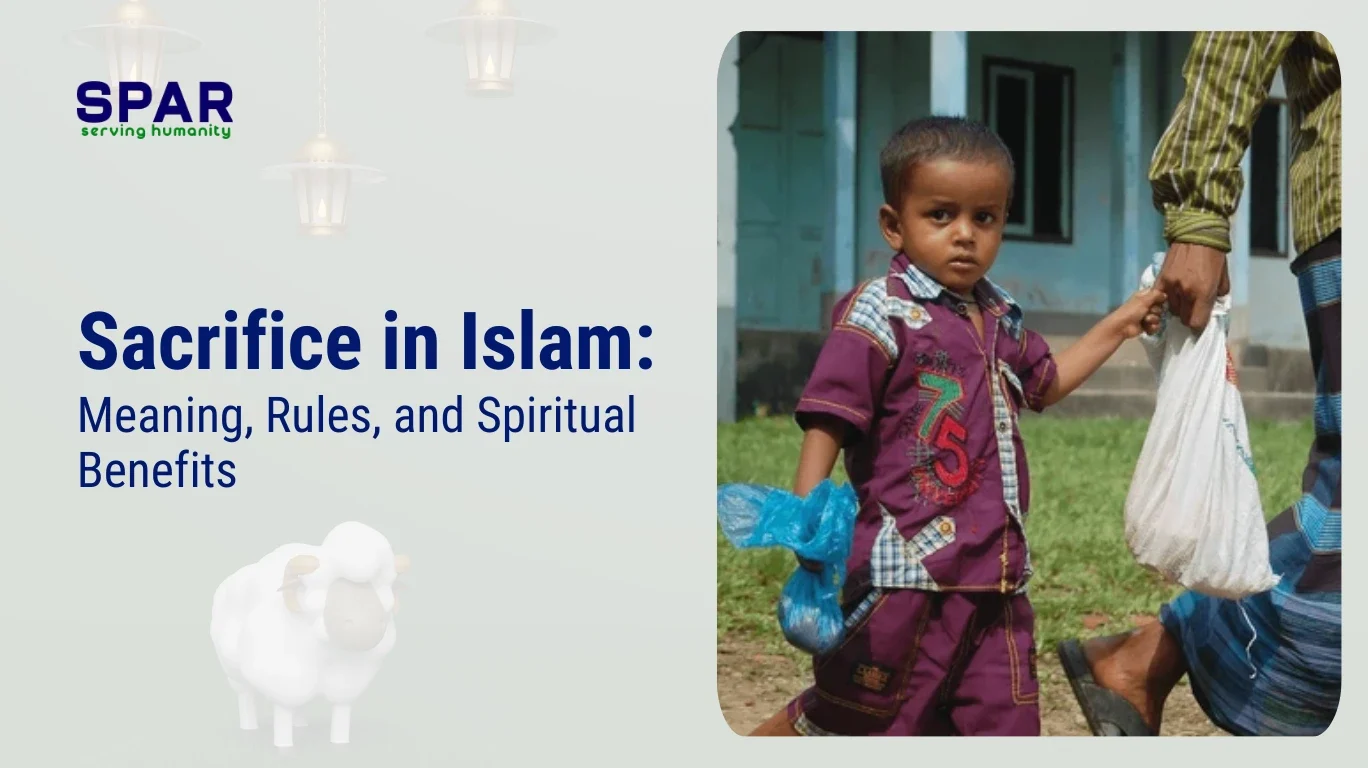
Sacrifice in Islam: Easy Meaning, Important Rules & Benefits
Sacrifice in Islam refers to Muslims performing the same sacrifice to Allah as followers of Ibrahim. At the same time, the reason for its performance and the rules for doing so are significantly different in Islam. Therefore, following the example of Ibrahim, Muslims seek to obey Allah once a year and show generosity and gratitude. In addition to earthly sacrifice, Islam also supposes sacrificing earthly passions, one’s well-being, etc., for the sake of Allah. This article provides a clear definition of the concepts of sacrifice in Islam, the rules for performing it, and its spiritual significance.
What Does Sacrifice Mean in Islam?
In Islam, a sacrifice is an offering made to Allah. It also refers to surrendering what is valuable to one’s worship. Sacrifice is usually understood as animal sacrifice. We should use this example to remind Muslims that a son is a sacrifice for Allah’s Commandment. Therefore, Muslims should bring offerings and make sacrifices every year, following his example.
Why is Sacrifice Important in Islam?
Timing is critical:
- Sacrifice commencement takes place after the Eid prayer on the 10th Dhul Hijjah.
- It extends until sunset on the 12th of Dhul Hijjah.Anything sacrificed before the Eid prayer is rejected and must be repeated.
If you follow this timeline, then your sacrifice is valid and acceptable by Allah.
Who Must Perform Sacrifice?
Importance of Sacrifice in Islam
- In Islam, sacrifice is essential for the following reasons:
- It reflects the act of surrendering to Allah.
- It recalls Prophet Ibrahim’s incredible faith.
It helps Muslims share their good fortune with those who are less fortunate.
Animals Allowed for Sacrifice
So, Islam has an obvious definition of what animals you can sacrifice:
- Sheep or goats, more than one year old.
- The requirement is for cows or buffaloes (minimum 2 years).
- Camels (minimum of five years old)
The animals must be healthy, sound, and free of defects or diseases.
Best Time to Perform Sacrifice
Timing is critical:
- The sacrifice begins with the Eid prayer on the 10th of Dhul Hijjah.
- It lasts until sunset on the 12th of Dhul Hijjah.
- Any act of sacrifice performed earlier than the Eid prayer is not accounted for; hence, it must be repeated.
The Sequence of Sacrifice The above timeline makes your sacrifice valid, and according to the Sunnah of your beloved Prophet Muhammad (PBUH) (SAW), it is accepted by Allah.
Correct Way to Perform Sacrifice (Zabiha)
Islam teaches kindness, even when sacrificing animals. Follow these easy steps:
- Position the animal towards the Qiblah (the direction towards the Kaaba) gently.
- When possible, use a knife to swiftly and humanely kill the animal.
- An animal killing is valid when he says clearly, as mentioned—”Bismillah, Allahu Akbar” at the killing time.
By doing this, your sacrifice becomes Makbool to Allah.
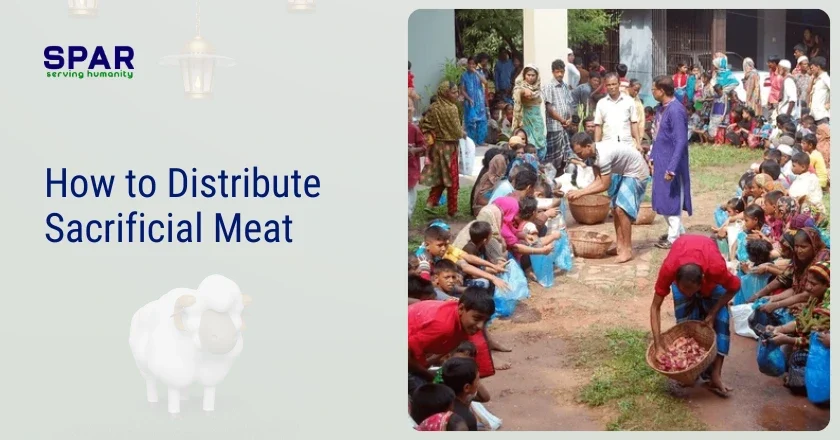
How to Distribute Sacrificial Meat
- Islam prescribes that the flesh be distributed into three equal shares: Islam recommends dividing the flesh into three equal portions:
- Hold on to a third for your family.
- Distribute one-third to relatives, neighbors, or friends.
- So, you can give one-third to poor and needy people.
In this way, anyone in the community can celebrate Eid.
Mistakes to Avoid During Sacrifice
Here are some common mistakes you should avoid to make sure your sacrifice is valid:
- Animal slaughtering prior to Eid prayer
- Selecting unfit animals or those that have been wounded.
- He forgets to say Allah’s name when slaughtering.
- Selling any part of the sacrificed animal afterward
- Awareness of these mistakes results in the correct performance of sacrifice.
Spiritual Benefits of Sacrifice in Islam
Having sincere sacrifice produces the studies of the spirit with:
- You are in obedience to Allah, and through obedience to Allah, you are growing closer to Allah.
- We are cultivating compassion and generosity.
- I am deeply thankful for Allah’s blessings.
- Clean your heart and soul of greed.
- Reinforcing and reinforcing communal ties through sharing and philanthropy.
- More Than Animals This article also appeared in Personal Sacrifice
Personal Sacrifice Beyond Animals
Sacrifice in Islam goes beyond just animal sacrifice. It means sacrificing personal wants, bad habits, or comforts to satisfy Allah. For example:
- Just Giving Money to Charity Instead of Spending it Yourself
- Giving up, for the sake of Allah, bad habits
- You can volunteer your time, energy, and skills to help those in need.
These sacrifices allow you to grow spiritually and become a better Muslim.
Can Women Perform Sacrifice?
There is an explanation above that clearly states that women can also perform sacrifices in Islam. Islamic requirements for women state that they can either carry out the sacrifice themselves or appoint an Isa/trusted person to do so on their behalf. As for religious duties, Islam treats men and women equally.
Sharing Sacrificial Meat with Non-Muslims
Islam encourages Muslims to share meat with their non-Muslim neighbors and friends. This will foster peace and friendship and get to know each other between different communities.
Sacrifices on Other Islamic Occasions
Besides Eid al-Adha, Muslims perform sacrifices on other occasions:
- Aqiqah: Celebrating the birth of a child.
- Hajj Sacrifice (Hady): Sacrifices performed by pilgrims during Hajj.
- Voluntary Sacrifices (Nadhr): Sacrifices offered as a vow or gratitude.
Understanding these other occasions helps you fulfill Islamic practices correctly.
Final Thoughts on Sacrifice in Islam
Islamic sacrifice is a potent expression of obedience and religious devotion. Knowing its rules and meanings for sure helps you perform this significant act correctly. If done sincerely, you may be able to have more faith, have a more purified heart, and build on your community due to practicing sacrifice. Compliance with this Islamic sunnah through animal qurbani or personal qurbani only increases your spirituality and makes Allah happy.
Do we make some compulsory sacrifice every year?
The sacrifice is obligatory every year on Eid al-Adha, yes, if you fulfill the financial conditions.
Can more than one family have an animal?
Yes, one cow or camel can be shared among seven families or even individuals. Sheep or goats only count one person or family.
Am I able to donate money in lieu of animal sacrifice?
The answer is NO. It does not suffice to give money instead of sacrificing on Eid al-Adha.
What if I miss the period to sacrifice?
If you miss sacrifice days, you must donate the same amount to charity immediately.
Are small-disturbed animals acceptable?
Minor injuries are permissible, but serious defects—defects, blindness, and severe illness—disqualify the animal.
Can I make sacrifices for the dead family?
Yes, it is permissible and recommended to perform voluntary sacrifices for deceased loved ones.
 Secure
donation
Secure
donation